
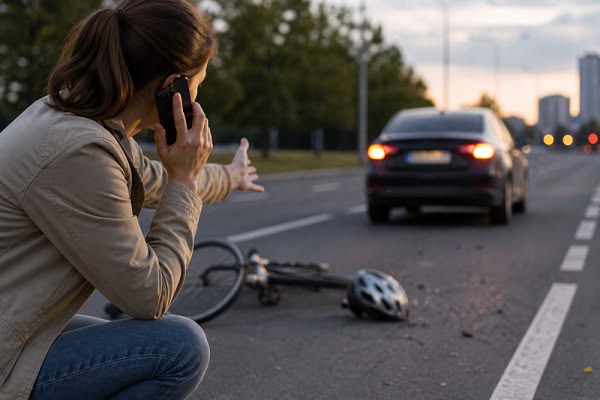
The minutes right after a hit-and-run feel chaotic, but the steps you take now directly affect whether you can recover medical bills, lost wages, and other losses later. Below is a practical, step-by-step guide for Clearwater and Pinellas County drivers, along with what Florida law actually requires and where injured victims typically turn for compensation.
If a driver fled the scene and left you with injuries, vehicle damage, and no way to identify who hit you, you don’t have to sort out insurance and legal options alone.
Immediate Steps to Take After a Hit-and-Run in Florida
Florida law requires every driver involved in a crash to stop, remain at the scene, exchange information, and render aid to anyone who’s injured. When a driver violates that duty and flees, it puts the full burden on you to preserve evidence and protect your claim in the first few minutes and hours. Here’s the order that matters most.
1. Call 911 and Request Medical Help
Even if injuries seem minor, call 911 from the scene. Dispatch will send law enforcement to investigate and paramedics if you need them. Adrenaline often masks pain from whiplash, concussions, or internal injuries, so let EMS evaluate you regardless of how you feel in the moment.
2. Do Not Chase the Fleeing Vehicle
It’s tempting to follow the other car to get a license plate, but pursuing a fleeing driver puts you and others at serious risk on the road. Instead, try to note details from where you’re standing: vehicle color, make, approximate model, direction of travel, and any part of the plate number you can catch.
3. Document Everything You Can
- Take photos of your vehicle’s damage, the crash location, skid marks, and any visible debris left behind (paint transfer, broken mirror or bumper pieces).
- Photograph your own injuries as soon as it’s safe to do so.
- Write down what you remember about the other vehicle while it’s fresh, including anything distinctive like a bumper sticker, roof rack, or commercial markings.
- Get contact information from any witnesses before they leave.
This kind of documentation overlaps heavily with what evidence helps win a car accident claim, and it matters even more in a hit-and-run because there’s no other driver’s insurance information to fall back on.
4. Look for Cameras and Witnesses Nearby
Traffic cameras, red-light cameras, and business security systems often capture crashes, but footage gets overwritten within days. If the crash happened near a gas station, retail store, or apartment complex, ask whether they have cameras pointed at the road and request that footage be preserved as soon as possible.
5. File a Police Report
A written crash report creates an official record of the hit-and-run, which your insurer will require to process an uninsured motorist claim. Get the report number and a copy of the report once it’s available, and request any follow-up from the investigating officer if the driver is later identified.
6. Notify Your Own Insurance Company
Report the crash to your insurer promptly, even though the other driver fled. Most policies require prompt notice, and waiting too long can jeopardize coverage you’re otherwise entitled to, particularly uninsured motorist benefits. This step is separate from, and in addition to, the general guidance in what to do after a car accident in Florida, since a hit-and-run shifts how your claim gets built from the start.

Florida’s Hit-and-Run Laws: What the Statute Actually Requires
Under Florida Statute 316.027, every driver involved in a crash resulting in injury or death must stop at the scene (or as close as safely possible), remain there, and provide identifying information and reasonable assistance, including arranging transportation to medical care if needed. Leaving the scene of a crash involving injury is a felony in Florida, and leaving the scene of a crash involving death is a first-degree felony. Property-damage-only hit-and-runs are also a crime under Florida law, typically charged as a misdemeanor, though the driver is still legally required to stop and attempt to locate or notify the owner of the damaged property.
These are criminal penalties aimed at the fleeing driver, separate from the civil claim you may have for your injuries and losses. Even if the driver is caught and prosecuted criminally, you still need to pursue your own compensation through the civil and insurance systems, which is a different process entirely.
How Compensation Works When the At-Fault Driver Can’t Be Found
This is the part that surprises a lot of hit-and-run victims: you generally can’t file a claim directly against a driver you can’t identify. When the at-fault driver is unknown, your own insurance coverage becomes the primary avenue for recovering damages beyond basic no-fault benefits.
Uninsured Motorist (UM) Coverage
Florida law treats an unidentified hit-and-run driver as, effectively, an uninsured motorist. If you carry uninsured motorist coverage in Florida, you can file a claim against your own policy for injuries, lost wages, and pain and suffering that exceed what your PIP benefits cover. UM coverage is optional in Florida, not mandatory, though insurers are required to offer it when you purchase a policy. If you’re not sure whether you carry it, check your policy declarations page or call your agent, since this single coverage often determines whether a hit-and-run victim can recover anything meaningful beyond medical bills.
Insurers typically require that you report the hit-and-run to police and to them promptly, and most policies have their own notice and cooperation requirements. Missing those internal deadlines, even while you’re still within Florida’s broader statute of limitations, can jeopardize your UM claim, so don’t wait to put your carrier on notice.
Florida PIP (No-Fault) Benefits
Regardless of fault, Florida requires drivers to carry at least $10,000 in Florida PIP insurance, which pays a portion of your medical bills and lost wages after any crash, including a hit-and-run. Critically, you must seek initial medical treatment within 14 days of the crash, or PIP benefits can be barred entirely. PIP generally covers 80% of reasonable medical expenses and 60% of lost wages, up to your policy limits, and the fuller $10,000 benefit typically requires a provider to diagnose an emergency medical condition. Because this clock runs regardless of who caused the crash or whether they’re ever identified, it’s one of the most time-sensitive deadlines after any Florida accident.
Why the Insurance Investigation Looks Different in a Hit-and-Run
Without another driver to investigate, your own insurer becomes both your source of recovery and, in effect, the party scrutinizing your claim. Understanding how car insurance companies investigate accident claims matters here, because carriers may question whether a hit-and-run even occurred, especially in single-vehicle crashes with no witnesses. Thorough documentation from the scene, a timely police report, and consistent medical treatment all help counter that scrutiny.
What If the Fleeing Driver Is Later Identified?
Sometimes police locate the driver, days or weeks after the crash, through witness tips, traffic camera footage, or vehicle debris left at the scene. If that happens, your claim may shift from a UM claim against your own insurer to a liability claim against the at-fault driver’s insurance, which can open up higher policy limits depending on what coverage they carry. Either way, the deadline to pursue a civil claim is governed by Florida’s personal injury statute of limitations, which is two years from the date of the crash for causes of action accruing on or after March 24, 2023, under House Bill 837. Missing that window generally forecloses your right to sue, so don’t assume an open police investigation pauses your own legal deadline.
Common Mistakes That Hurt Hit-and-Run Claims
- Skipping medical care because injuries feel minor. Beyond your health, this risks losing PIP benefits if you miss the 14-day treatment window, and it gives insurers room to argue your injuries weren’t serious or weren’t caused by the crash.
- Not reporting the crash to police. A police report is often required before an insurer will process a UM claim, and delayed reporting invites doubt about whether a hit-and-run actually happened.
- Waiting to notify your own insurer. Policy notice requirements can be stricter than you expect, and prompt reporting preserves your ability to claim UM benefits.
- Assuming nothing can be done without the other driver’s identity. UM coverage exists specifically for this situation. Many victims don’t realize they have it until they review their policy.
- Giving a recorded statement to an insurer without understanding the claim. What you say early on can be used to minimize your payout later.
Why Local Guidance Matters in Clearwater and Pinellas County
Hit-and-run crashes in Pinellas County often happen on high-traffic corridors like US 19, Gulf-to-Bay Boulevard, and the Memorial Causeway, where congestion and quick lane changes create opportunities for a fleeing driver to disappear into traffic. Local police departments handle the criminal side of these cases, but building a strong UM or PIP claim takes separate work, gathering scene evidence, coordinating with your insurer, and tracking statutory deadlines. A Clearwater car accident attorney familiar with how local insurers and investigators handle these claims can help make sure nothing falls through the cracks while you focus on recovering.
FAQs
Can I still get compensation if the driver who hit me is never found?
Yes, in most cases. If you carry uninsured motorist coverage, you can file a claim against your own policy for injuries and losses that exceed your PIP benefits, even though the at-fault driver was never identified. Florida PIP benefits are also available regardless of fault, as long as you sought treatment within 14 days of the crash.
What if I don’t have uninsured motorist coverage?
Without UM coverage, your options narrow considerably. You’d still have PIP benefits (up to your policy limits) for medical bills and lost wages, but recovering pain and suffering or amounts beyond PIP becomes much harder unless the driver is later identified and carries liability insurance. This is one reason it’s worth reviewing your policy and talking to an attorney about what coverage, if any, might apply to your specific situation.
How long do I have to report a hit-and-run in Florida?
You should report it to police and your own insurer as soon as possible after the crash, ideally the same day. While Florida’s personal injury statute of limitations gives you two years to file a civil claim for crashes on or after March 24, 2023, your own insurance policy likely has much shorter notice requirements for reporting a claim, and PIP requires initial treatment within 14 days to preserve benefits. Don’t rely on the two-year window as your reporting deadline.
Is leaving the scene of an accident really a crime in Florida?
Yes. Florida Statute 316.027 makes it a felony to leave the scene of a crash involving injury, and leaving the scene of a crash involving death is a first-degree felony. Even a property-damage-only hit-and-run is a crime under Florida law. These are criminal penalties for the fleeing driver and are separate from your civil claim for compensation.
Should I handle a hit-and-run insurance claim on my own?
You can, but UM and PIP claims after a hit-and-run tend to involve more scrutiny from insurers than a standard two-vehicle crash, since there’s no other driver’s insurance to help corroborate what happened. An attorney can help gather and preserve evidence, communicate with your insurer, and make sure you don’t miss policy notice deadlines or the statute of limitations while you’re focused on recovering.
If you’ve been hurt in a hit-and-run and aren’t sure where to start, Ghaly Injury Law can help you understand your coverage and next steps.