
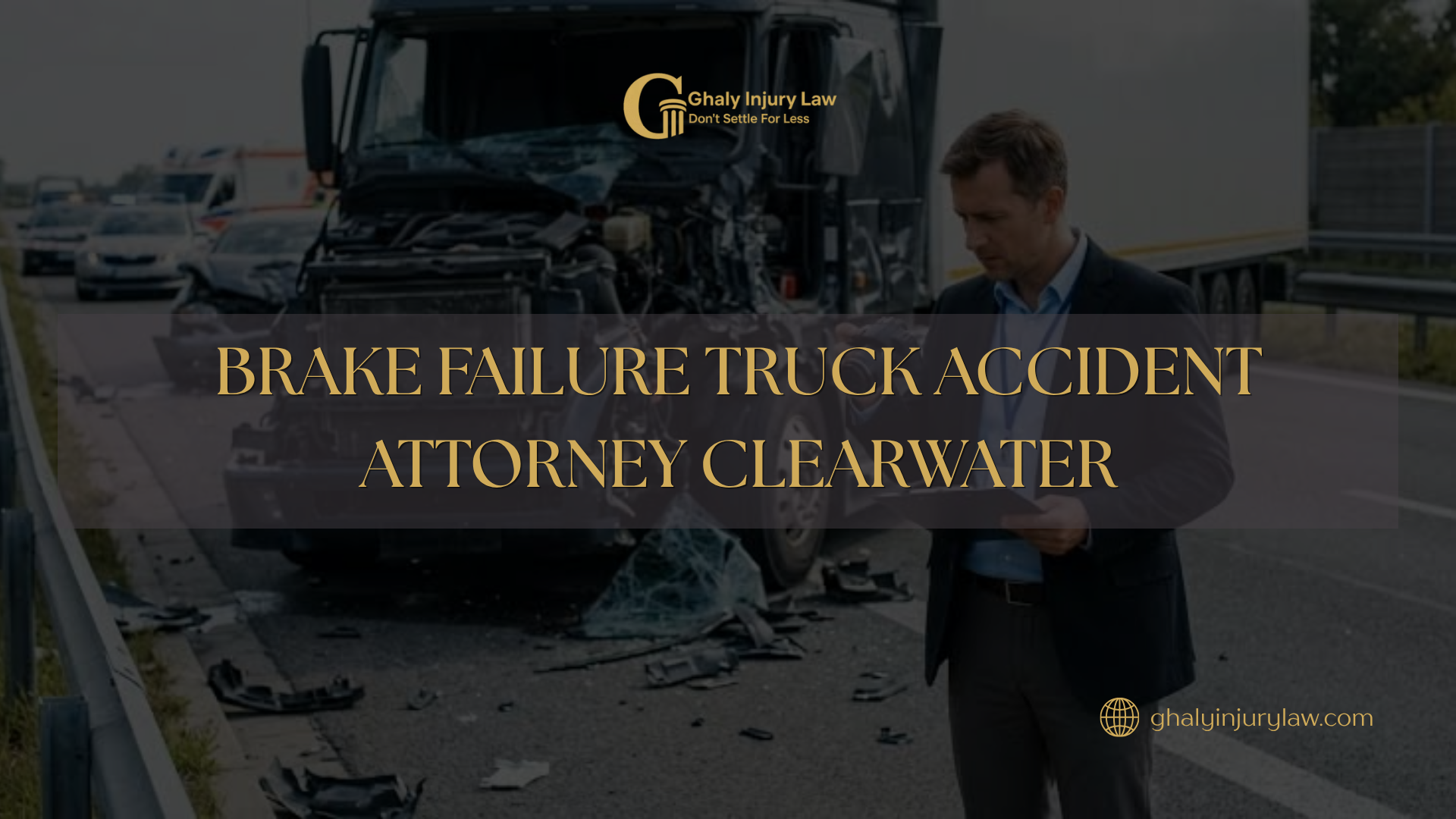
Brake failure is just one of many mechanical and human factors that lead to serious truck crashes in the Tampa Bay area. For a broader look at what causes truck accidents, see our complete guide to truck accident causes. This article takes a closer, more technical look at one specific and frequently preventable cause: brakes that simply stop working.
How and Why Commercial Truck Brakes Fail
A fully loaded semi-truck can weigh 80,000 pounds or more, and stopping that much weight safely depends on a braking system that is inspected, adjusted, and repaired on a strict schedule. When any link in that chain breaks, the brakes can fade, lock up, or fail outright. Below are the most common mechanical explanations we see in brake-failure crash investigations.
Worn Brake Pads and Shoes
Every time a truck driver brakes, friction wears down the pads or shoes pressed against the rotors or drums. Federal regulations require these components to be inspected regularly and replaced before they wear past a safe thickness, but a carrier trying to save money on parts and downtime may push replacement intervals too far. Thin, worn linings simply cannot generate enough stopping force for a heavy trailer, especially on a downhill grade or during a sudden stop in Tampa Bay traffic.
Neglected Maintenance and Inspection Schedules
Federal Motor Carrier Safety Administration (FMCSA) rules under 49 CFR Part 396 require motor carriers to systematically inspect, repair, and maintain every commercial vehicle in their fleet, including at least one thorough annual inspection and a pre-trip and post-trip inspection by the driver before and after every haul. When a company falsifies inspection reports, defers scheduled brake service, or ignores a driver’s written defect report to keep a truck earning money, small problems like a slow air leak or a loose slack adjuster can snowball into complete brake failure.
Air Brake System Failures
Most semi-trucks use air brakes rather than the hydraulic brakes on a passenger car, and that system has its own failure points. A cracked air line, a failing compressor, moisture that freezes inside the lines in cold weather, or a slack adjuster that has drifted out of proper adjustment can all rob a truck of stopping power at the worst possible moment. Federal brake adjustment and component standards exist precisely because air brake systems require more disciplined, ongoing maintenance than most passenger vehicle drivers ever think about.
Manufacturing and Parts Defects
Not every brake failure is a maintenance failure. A defectively designed or manufactured brake chamber, valve, rotor, or anti-lock braking system (ABS) module can cause brakes to fail even on a truck that was properly serviced on schedule. When the evidence points to a part itself rather than neglect, the case may support a product liability claim against the manufacturer or distributor of that component, separate from any claim against the driver or carrier.

Contact us
The Federal Rules Trucking Companies Are Supposed to Follow
Truck brakes aren’t a matter of guesswork they’re governed by detailed federal regulations that exist specifically to prevent the kind of catastrophic crash that brings people to our office. Under 49 CFR Part 393, Subpart C, every commercial truck and trailer must be equipped with a brake system that meets minimum federal safety standards, with specific rules covering brake components, adjustment, and stopping distance. Under 49 CFR Part 396, motor carriers must systematically inspect, repair, and maintain those brakes, keep maintenance records for every vehicle, and ensure at least one qualified annual inspection covering the brake system and other critical components.
Drivers, meanwhile, are required to perform a pre-trip inspection before every haul and to document any defects including brake problems in a Driver Vehicle Inspection Report (DVIR). When a trucking company or driver cuts corners on these federal requirements and someone gets hurt as a result, that’s not just a paperwork violation. Under Florida law, it can be powerful evidence of negligence.
Who Can Be Held Liable After a Brake-Failure Truck Crash in Clearwater
Because so many hands touch a commercial truck’s brakes before it ever gets on the road the driver, the carrier’s maintenance department, outside repair shops, and the parts manufacturer figuring out who is liable after a truck accident caused by brake failure often takes a real investigation, not a guess. More than one party can share fault.
The Truck Driver
A driver who skips the required pre-trip inspection, or who notices a soft brake pedal, a dashboard warning light, or an air pressure problem and drives anyway, can be personally negligent. Fatigue and unfamiliarity with how a fully loaded trailer changes stopping distance can also keep a driver from responding safely once brakes begin to fail.
The Trucking Company
Motor carriers are required to maintain detailed brake maintenance and inspection records for every truck in the fleet. A company that stretches out service intervals, ignores a driver’s defect reports, or pressures drivers to skip inspections to make tight delivery windows can be held liable for negligent maintenance, negligent hiring, or negligent supervision.
A Third-Party Maintenance or Repair Contractor
Many trucking companies outsource brake service to independent repair shops rather than keeping it in-house. If a mechanic improperly adjusts, replaces, or repairs a brake component and that work later fails on the road, the repair shop and its insurer can bear liability separate from the trucking company itself.
The Parts Manufacturer
When the evidence traces a brake failure to a defective chamber, valve, rotor, or ABS component rather than a lack of maintenance the case may proceed as a product liability claim against the manufacturer, independent of whether the driver or carrier did anything wrong. Because these cases often involve multiple insurance policies and corporate defendants, working with a semi-truck accident lawyer in Clearwater early can help make sure no responsible party is overlooked before evidence disappears.
The Evidence That Builds a Brake-Failure Claim
Brake failure cases are won or lost on evidence that trucking companies control which is exactly why it needs to be secured quickly, often before repairs, cleanup, or routine data overwrites destroy it. Key evidence typically includes:
- The truck’s ECM (“black box”) data, which records speed, braking input, and throttle activity in the moments before the crash
- Maintenance and inspection logs, showing whether brake service followed the manufacturer’s schedule and FMCSA requirements
- DOT and roadside inspection reports, which may show a documented history of brake violations
- Driver logs and Driver Vehicle Inspection Reports (DVIRs), which reveal whether brake problems were reported and how the company responded
- A post-crash mechanical inspection of the brake system by an engineer or accident reconstruction expert
- Driver qualification and training files, showing whether the driver was properly trained to inspect and respond to brake issues
Because a trucking company’s insurer often has an investigator on scene within hours, delay works against the injured victim, not the carrier.
Why a Truck Accident Attorney Makes a Difference in a Brake-Failure Case
Trucking companies carry significant insurance policies precisely because crashes like this are so severe, and their claims teams begin building a defense almost immediately. A truck accident lawyer in Clearwater who handles these claims regularly knows how to send an evidence preservation letter before records are purged, subpoena maintenance and ECM data, and bring in mechanical and accident reconstruction experts who can explain, in plain terms, exactly why the brakes failed and who let it happen. That investigation not a guess about what “probably” happened is what turns a catastrophic crash into a fair settlement or verdict.
Related Reading: If you want to explore other mechanical and human factors behind serious truck crashes in our area, see Most Common Causes of Truck Accidents in Clearwater and Blind Spot Truck Accident Attorneys in Clearwater.

Contact us
Frequently Asked Questions
What usually causes a truck’s brakes to fail?
Most brake failures come down to worn pads or shoes, skipped or falsified maintenance, air brake system problems like leaks or moisture in the lines, or a defective brake part. Federal regulations require trucking companies to catch these problems before a truck is on the road, so a failure is usually a sign that an inspection or repair was missed not an unavoidable accident.
Who is responsible if a truck’s brakes failed and caused my crash?
Depending on what the investigation shows, liability can fall on the truck driver, the trucking company, an outside maintenance contractor, or the manufacturer of a defective brake part. Many brake-failure crashes involve more than one liable party, which is why a full investigation matters more than it does in a typical car accident case.
What evidence is needed to prove a brake failure caused my truck accident?
Strong brake-failure claims typically rely on the truck’s ECM (“black box”) data, maintenance and inspection records, DOT inspection history, driver logs and DVIRs, and a hands-on mechanical inspection of the brake system after the crash. Much of this evidence can be lost, overwritten, or repaired away within days, so it needs to be secured as early as possible.
How long do I have to file a truck accident claim in Florida?
Florida law generally gives injury victims two years from the date of the crash to file a personal injury lawsuit, following a 2023 change to the state’s statute of limitations. Because the deadline is shorter than many people expect, and evidence in trucking cases disappears quickly, it’s wise to speak with an attorney well before that deadline approaches.
Do I still need an attorney if the trucking company’s insurer already contacted me?
Yes. Trucking companies and their insurers often begin protecting their own interests within hours of a crash, and anything you say in a recorded statement can be used to reduce the value of your claim. An attorney can communicate with the insurer on your behalf and make sure the brake-failure investigation isn’t left entirely in the trucking company’s hands.
Talk to Ghaly Injury Law About Your Brake-Failure Truck Accident
If you or someone you love was injured in a Clearwater truck accident caused by brake failure, you don’t have to sort out the trucking company’s maintenance records and insurance tactics on your own. Ghaly Injury Law offers free, no-obligation consultations and works on a contingency basis, so you pay nothing unless we recover for you. Visit Ghaly Injury Law or call [(727) 748-1748] today to talk through what happened and find out where you stand.