
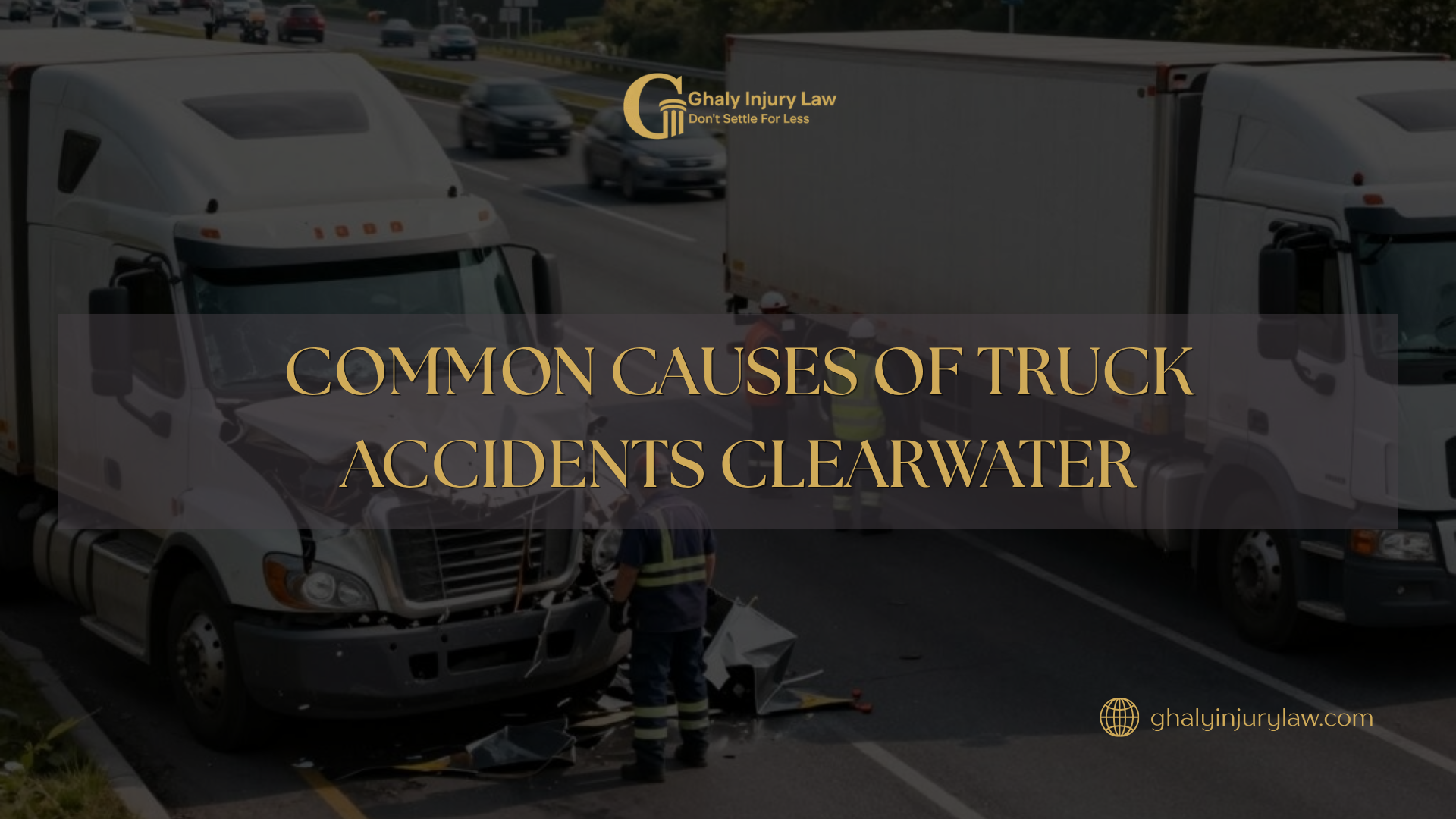
Understanding why these accidents happen matters just as much for prevention as it does for building a strong injury claim. Trucking companies carry commercial insurance specifically because these risks are foreseeable, and in many cases, the same handful of causes shows up again and again in police reports and crash reconstructions across Pinellas and Hillsborough counties.
1. Driver Fatigue
Federal hours-of-service rules limit how long a commercial driver can be on the road without rest, but tight delivery schedules and long hauls along Florida’s interstate corridors still push some drivers past safe limits. Fatigue slows reaction time in ways similar to alcohol impairment, making it harder for a driver to notice slowing traffic or a merging vehicle in time to stop. Some fleets pressure drivers to skip mandated rest breaks or log their hours inaccurately to hit delivery deadlines, which only compounds the danger already created by exhaustion.
- Erratic lane drifting in the moments before impact
- No evidence of braking at the crash scene
- Driver logs that don’t match GPS or fuel-stop records
2. Distracted Driving
Cell phones, dispatch tablets, GPS units, and even eating behind the wheel take a driver’s eyes off the road at highway speed. Because commercial trucks need far more distance to stop than passenger vehicles, even a few seconds of distraction on a busy stretch of US-19 or Gulf-to-Bay Boulevard can turn a routine slowdown into a serious collision. Some trucking companies require hands-free devices only, but enforcement varies widely, and dispatch messages sent mid-route remain a persistent source of distraction across the industry.
3. Improper Cargo Loading
When cargo is loaded unevenly, overloaded, or not secured properly, it can shift during transport and cause a truck to become unstable, jackknife, or roll over. This is a particular concern along Tampa Bay’s port-adjacent routes and warehouse corridors, where trucks are loaded and unloaded throughout the day.
- Cargo shifting suddenly during hard braking or sharp turns
- Overweight trailers exceeding axle or gross vehicle weight limits
- Missing, worn, or failed tie-downs, straps, and chains
Responsibility for a loading-related crash can extend well beyond the driver which is one reason who is liable after a truck accident isn’t always obvious without a closer look at the shipping and logistics companies involved.
4. Brake Failure & Mechanical Defects
Commercial trucks require rigorous, regular maintenance, and brakes are one of the most common failure points on a vehicle carrying tens of thousands of pounds. Worn brake pads, air brake malfunctions, or skipped inspection schedules can leave a truck unable to stop in time a particularly serious risk on the elevated spans and merge points along I-275. Federal regulations require periodic inspections, but paperwork gaps and rushed turnaround times between hauls can allow a defect to go unnoticed until it’s too late.

Contact us
5. Blind Spots / No-Zones
Large trucks have significantly bigger blind spots often called “No-Zones” on all four sides than passenger vehicles. A car that lingers alongside a trailer or merges too closely in front of one may be completely invisible to the driver, especially in the dense, unpredictable lane-changing traffic near Clearwater’s beaches and tourist corridors during peak season. Mirrors and blind-spot warning systems can reduce this risk, but they rarely eliminate it entirely, which is why passenger vehicles should avoid lingering beside a trailer’s rear wheels.
6. Speeding
Trucking companies and drivers are often under pressure to meet tight delivery windows, and some drivers exceed safe speeds for the conditions to make up time. Speeding cuts into a truck’s already long stopping distance, and on high-traffic roads like SR-60 through Clearwater, that can turn an ordinary slowdown into a multi-vehicle crash.
- Per-load or per-mile pay structures that reward faster trips
- Underestimating stopping distance in wet or congested conditions
7. Driving Under the Influence
Commercial drivers are held to stricter alcohol and drug regulations than ordinary motorists, but impairment from alcohol, prescription medication, or illicit drugs still plays a role in some crashes. Impairment slows reaction time and clouds judgment, and it becomes even more dangerous when combined with long hours on the road. Random and post-accident drug and alcohol testing requirements exist under federal law specifically because of how dangerous impairment becomes behind the wheel of a multi-ton vehicle.
8. Inadequate Driver Training
Not every trucking company invests adequately in training its drivers on defensive driving, hazard recognition, or how to handle specific trailers and cargo types. An undertrained driver may not know how to correct a skid, respond to a sudden tire blowout, or navigate tight turns near Tampa Bay’s busy urban intersections all of which raise the risk of a serious accident.
9. Adverse Weather
Florida’s sudden afternoon thunderstorms, heavy rain, and occasional fog can create hazardous driving conditions with little warning. Wet roads dramatically increase stopping distances for an already heavy vehicle, and reduced visibility during a downpour on I-275 or US-19 can make it difficult for a truck driver to react to sudden slowdowns in traffic. Drivers unfamiliar with Florida’s rapid weather shifts especially those from out of state may not adjust their speed or following distance quickly enough once a storm rolls in.
10. Following Too Closely
Tailgating gives a truck driver far less time to react to sudden braking ahead, and because trucks need much more distance to stop safely, following too closely is a leading cause of serious rear-end collisions. This risk climbs during peak tourist season, when unfamiliar drivers unexpectedly slow near beach exits and attractions throughout Clearwater and the greater Tampa Bay area. Collision-avoidance technology can help in newer trucks, but not every commercial vehicle on the road today is required to have this equipment installed.
These causes often overlap a fatigued driver is more likely to follow too closely, and a poorly trained driver may not react well to sudden weather changes. If a semi-truck or tractor-trailer was involved in your crash, an experienced semi-truck accident lawyer in Clearwater can help determine which of these factors contributed and identify every party who may be responsible.
Related Reading: Two of the causes above deserve a closer look. See our in-depth guides on Brake Failure Truck Accident Attorney in Clearwater and Blind Spot Truck Accident Attorneys in Clearwater for more on how those specific cases are handled.

Contact us
Frequently Asked Questions
What is the most common cause of truck accidents in Clearwater?
Driver fatigue and distracted driving are among the most frequently cited causes of truck accidents in Clearwater and the broader Tampa Bay area, often made worse by heavy seasonal traffic on highways like US-19, SR-60, and I-275. Other contributing factors, such as speeding and improper cargo loading, also appear frequently in local crash investigations.
Who can be held responsible for a truck accident caused by these factors?
Depending on the cause, liability may fall on the truck driver, the trucking company, a cargo loading company, or a vehicle maintenance provider. Because more than one party is often involved, working with a truck accident lawyer in Clearwater can help make sure every responsible party is identified and held accountable.
How is a truck accident investigation different from a car accident investigation?
Truck accident cases typically involve more layers of evidence than a standard car accident, including electronic logging device (ELD) data, driver qualification files, maintenance and inspection records, and federal safety regulations enforced by the Federal Motor Carrier Safety Administration (FMCSA). Reconstructing what happened often requires input from accident reconstruction experts and a review of the truck’s onboard diagnostics, which is one reason these claims tend to take longer to fully investigate.
How long do I have to file a truck accident claim in Florida?
In most cases, Florida law gives injury victims two years from the date of the accident to file a negligence-based injury claim (Fla. Stat. § 95.11), though exceptions can apply depending on the circumstances. Because evidence like driver logs and black box data can be lost or overwritten quickly, it’s best to speak with an attorney as soon as possible after a crash.
Do I need a lawyer after a truck accident in Clearwater?
It isn’t legally required, but truck accident cases are usually far more complex than typical car accident claims due to federal trucking regulations, multiple potentially liable parties, and well-resourced insurance defense teams. An attorney can also help preserve time-sensitive evidence, such as dash cam footage or electronic logs, before it is lost, and many victims choose to get a free case evaluation before speaking with any insurance adjuster.
If you or a loved one has been injured in a truck accident in Clearwater or anywhere in the Tampa Bay area, you don’t have to face the insurance companies alone. The team at Ghaly Injury Law offers free, no-obligation consultations and works on contingency meaning you pay nothing unless we recover compensation for you. Call [(727) 748-1748] or visit ghalyinjurylaw.com today to discuss your case with an experienced Clearwater truck accident attorney.