

What Is a Truck Accident Black Box and What Can It Prove?
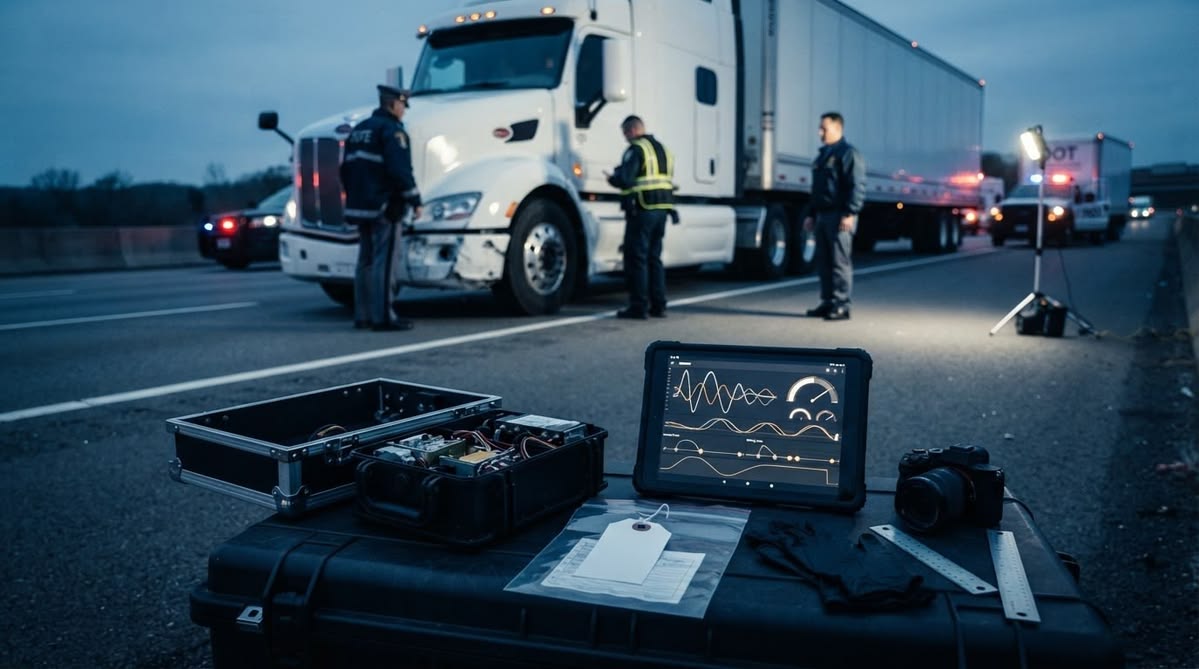
A truck accident “black box” usually refers to the Electronic Control Module (ECM) and its companion Event Data Recorder (EDR) function — onboard computer systems built into most commercial trucks that continuously monitor engine and vehicle performance. In the seconds surrounding a crash, these systems can lock in a snapshot of data like road speed, engine RPM, throttle position, braking activity, and whether a seatbelt was buckled.
That data can be some of the most objective evidence available after a truck crash, because it does not depend on anyone’s memory or version of events. But it is also fragile: it can be overwritten, lost when a truck goes back into service, or made inaccessible without the right tools and legal steps, which is why acting quickly matters.
If a commercial truck hit you or someone you love, that truck’s onboard data may already be at risk of being lost — and it could be the difference between a denied claim and a fully proven one.
Understanding the “Black Box” in a Commercial Truck
Unlike the dedicated, brightly colored flight recorders on an airplane, a truck’s “black box” isn’t a single standalone device. It’s a general term for a handful of separate onboard computer systems, each capturing different data that can matter in a crash investigation.
The Electronic Control Module (ECM)
The ECM is the central computer that manages the truck’s engine. It continuously tracks operational data such as:
- Vehicle speed over time
- Engine RPM and throttle position
- Brake application and anti-lock braking system activity
- Cruise control status
- Fault codes and mechanical warnings
- Hard-braking or sudden deceleration events
Many ECMs are built to flag and store a short window of data automatically when the system detects a sudden change in speed or a hard-braking event — the kind of trigger a crash typically produces.
The Event Data Recorder (EDR) Function
The EDR function works alongside the ECM to preserve a tighter window of crash-specific data, often covering several seconds before, during, and after an impact. This can include pre-crash speed and braking trends, throttle changes, and in some systems, seatbelt use at the moment of impact. Together, the ECM and EDR data can help reconstruct exactly what the truck was doing in the critical moments leading up to a collision.
Electronic Logging Devices (ELDs)
Separately, federal rules from the Federal Motor Carrier Safety Administration (FMCSA) require most commercial truck drivers to use an Electronic Logging Device to automatically record Hours of Service — how long the driver has been behind the wheel, on duty, and off duty. ELD data doesn’t capture crash dynamics the way an ECM or EDR does, but it can reveal whether a driver was fatigued, over their legal driving hours, or falsifying paper logs, all of which can be central to a fatigue-related crash claim.
Why Black Box Data Matters for Liability
In a truck accident claim, proving fault often comes down to reconstructing what actually happened on the road — and black box data can corroborate or contradict the stories told by the truck driver, the trucking company, and even witnesses.
For example, ECM data showing the truck was traveling well above the posted speed limit, or that the driver never applied the brakes until a fraction of a second before impact, can directly support a claim that speeding or inattentiveness caused the wreck. Data showing no braking at all, combined with a mechanical fault code, might instead point toward brake failure as a contributing factor. This kind of hard data is frequently central to establishing truck accident causes and building the evidentiary foundation of a claim.
Black box and ELD data can also help answer the threshold question of who is liable after a truck accident — the driver individually, the trucking company that employs them, or both. If logs show the driver was pushed past legal hours-of-service limits, that can shift liability toward the carrier for scheduling or oversight failures, in addition to the driver’s actions at the moment of the crash.
Why This Evidence Can Disappear Quickly
This is the part most crash victims don’t realize until it’s too late: black box data is not permanent, and trucking companies are not always required to preserve it indefinitely on their own.
Overwriting and Limited Storage
ECMs and EDRs generally have limited onboard memory. Depending on the system, new operating data can overwrite older stored events, including crash-related data, especially once the truck is driven again after the collision. The longer a truck stays in normal operation after a wreck, the greater the risk that the relevant data gets erased.
The Truck Going Back Into Service
Trucking is a business built around keeping vehicles moving. Unless someone specifically intervenes, a damaged truck may be repaired and returned to the road, or sold, scrapped, or reassigned — any of which can result in the loss of the ECM, the EDR data, or both before an attorney or investigator ever gets access to it.
Proprietary Formats and Limited Retention
Even when the data still exists, retrieving it isn’t as simple as plugging in a USB drive. Different truck and engine manufacturers use proprietary diagnostic software and hardware interfaces, meaning specialized tools and trained technicians are often required to download and interpret the data correctly. ELD records and hours-of-service logs are also subject to federal retention requirements that don’t keep data available forever, so there is a real window of time in which this evidence can realistically be recovered.
How an Attorney Preserves This Evidence
Because truck crash data is time-sensitive, one of the first and most important steps a truck accident lawyer in Clearwater can take is sending a spoliation letter, also called a preservation of evidence letter, to the trucking company, its insurer, and any other party that may control relevant records.
What a Preservation Letter Typically Covers
- ECM and EDR data from the truck involved in the crash
- ELD records and hours-of-service logs for the driver
- Dispatch and routing records
- Dashcam or in-cab camera footage, if equipped
- Maintenance and inspection records
- Driver qualification and training files
This letter puts the trucking company and its insurer on formal legal notice that litigation is anticipated and that specific evidence must not be altered, discarded, or allowed to be overwritten. Courts can impose serious consequences on a company that destroys evidence after receiving such notice, which gives trucking companies a strong incentive to preserve it once they’ve been asked.
Getting Access to the Data
Even with a preservation letter in place, actually obtaining and downloading the data often requires more than a polite request. Depending on the circumstances, an attorney may need to:
- Arrange for a joint inspection with a qualified data retrieval specialist
- Issue a subpoena if the trucking company or a third party is uncooperative
- Retain an accident reconstruction expert to interpret the raw data once retrieved
- Cross-reference the black box data with police reports, scene evidence, and witness statements
Speed matters at every stage of this process. The sooner a preservation letter goes out and the sooner an inspection is arranged, the better the odds that the data survives and accurately reflects what happened. This urgency is one of the many reasons crash victims benefit from involving a lawyer early, whether the crash involved a box truck, tractor-trailer, or other commercial vehicle covered under the most common causes of truck accidents in Clearwater.
Frequently Asked Questions
Does every commercial truck have a black box?
Most newer commercial trucks have an ECM with some level of event-recording capability, but the specific data captured and how long it’s retained can vary significantly by manufacturer, engine model, and truck age. An attorney or data retrieval specialist can determine what a specific truck’s system is capable of recording.
Can I get the black box data myself after a crash?
It’s extremely difficult for an individual to obtain this data directly. Trucking companies and their insurers are not obligated to simply hand it over, the formats are often proprietary, and without a formal preservation letter or subpoena, the data may be altered or lost before you ever get access to it.
How long do I have before the data might be lost?
There’s no single universal timeline, since it depends on the truck’s systems, the carrier’s practices, and how quickly the vehicle returns to service. That uncertainty is exactly why preservation letters are typically sent as soon as possible after a crash, rather than waiting.
What if the trucking company destroys the data anyway?
If a company destroys or loses evidence after being formally notified to preserve it, that can constitute spoliation of evidence, which courts can penalize in various ways, including allowing a jury to assume the missing evidence would have been unfavorable to the company that lost it.
Is black box data the only evidence used in a truck accident claim?
No. Black box and ELD data are powerful pieces of evidence, but they’re typically used alongside police reports, witness statements, photos and video from the scene, maintenance records, and input from accident reconstruction experts to build a complete picture of liability, similar to the approach a semi-truck accident lawyer in Clearwater would use to build a full case.
If you were involved in a truck crash and have questions about what evidence might still be recoverable, Ghaly Injury Law can help you understand your options and move quickly to protect the record before it disappears.